
Are Desk Treadmills Worth It for Weight Loss and Health?
A comprehensive look at the research on treadmill desks, comparing them to standing desks and under-desk bikes for weight loss, posture, and productivity.
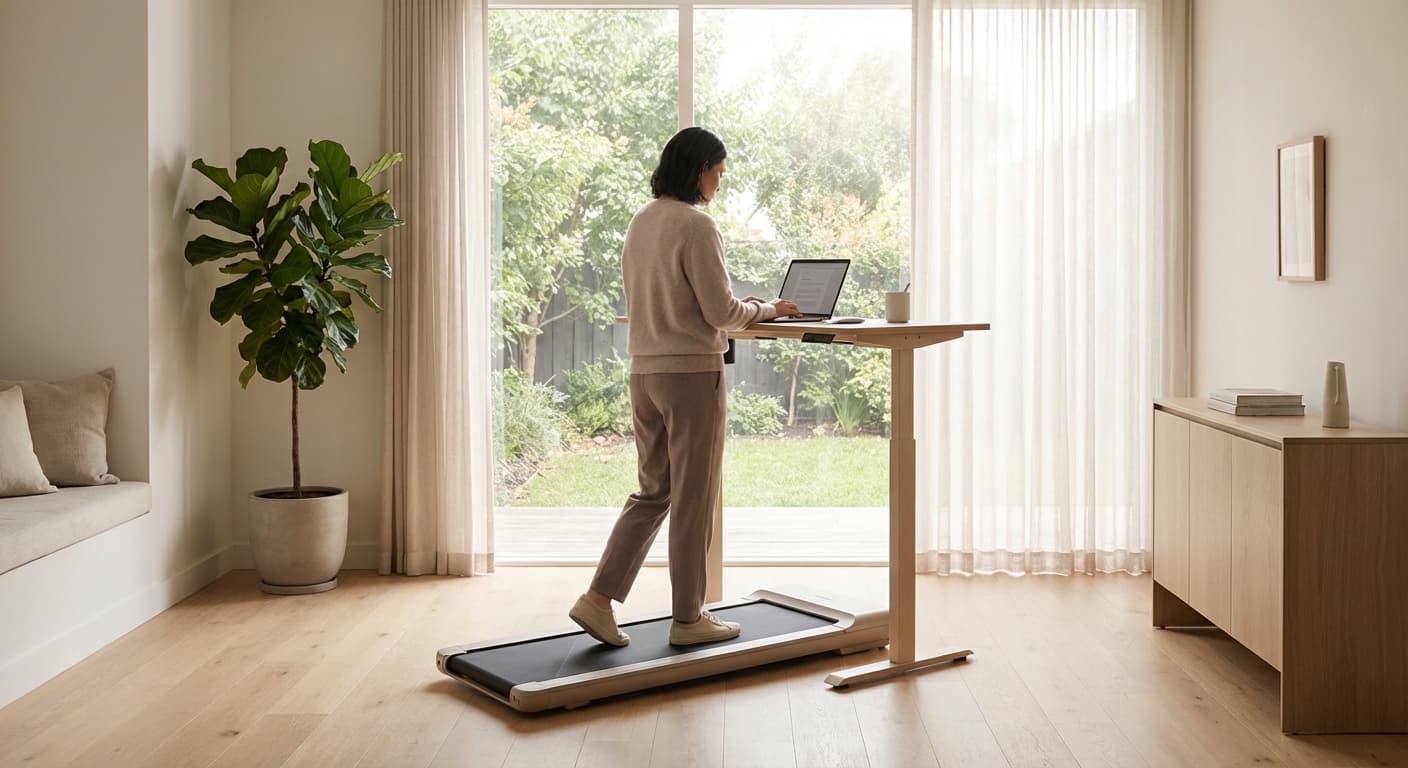
In an era where many of us spend hours sitting at our desks, the idea of walking while working has obvious appeal. Desk treadmills (or treadmill desks) combine a standing-height workstation with a slow-moving treadmill, enabling you to get your steps in during the workday. Advocates claim these devices aid with weight loss and improve overall health – from posture and energy levels to cardiovascular fitness and even mental well-being. But are treadmill desks really worth it for someone focused on weight loss and wellness? In this article, we take a holistic look at the research and compare treadmill desks with other options like standing desks and under-desk bikes. The goal is to help you decide if walking at your desk is a worthwhile investment in your health.
Weight Loss Benefits of Treadmill Desks
One of the main reasons people consider a treadmill desk is to burn extra calories and lose weight. How much more energy do you actually expend by walking at your desk? Research gives us some concrete numbers. A Harvard-affiliated study measured calories burned during different office setups: sitting burns roughly 80 calories per hour, standing burns about 88 calories/hour, but walking at a gentle pace on a treadmill desk can burn around 210 calories/hour.1 In other words, an hour of slow walking while you work burns over 130 more calories than sitting – a significant boost in daily energy expenditure.
Over time, those extra calories can add up. A year-long Mayo Clinic trial found that office workers who had their traditional desks replaced with treadmill desks lost an average of 1.4 kg over the year, despite making no other intentional changes to diet or exercise habits.2 The weight loss was even greater for participants classified as obese – they lost about 2.3 kg on average during the year-long intervention. These results suggest that a treadmill desk can indeed help with gradual weight loss or weight maintenance by increasing daily physical activity. The same study confirmed that treadmill desk users significantly reduced their sedentary time and increased overall daily movement, all without any drop in work performance. In fact, access to a treadmill desk improved health markers and came "without affecting work performance," according to the researchers.
It's important to keep expectations realistic – a treadmill desk isn't a miracle weight-loss device, but it can give you an edge. Burning an extra 100–130 calories per hour might translate to several hundred extra calories burned in a typical workday, which over weeks and months can contribute to fat loss (provided one doesn't compensate by eating more). Non-exercise activity like walking slowly while typing falls under NEAT (non-exercise activity thermogenesis), which can meaningfully aid weight management. In short, treadmill desks do help burn more calories than sitting or standing, and studies show they can lead to modest weight loss over time. Just remember that for significant weight loss, you'll still need to consider your overall diet and exercise routine beyond the desk.
Posture, Back Pain and Ergonomics
Aside from weight loss, a big selling point of active workstations is relief from the aches and pains of prolonged sitting. How do treadmill desks affect posture and musculoskeletal health? When you use a treadmill desk, you spend more time standing or walking upright instead of slumping in a chair. This can have benefits for your posture and back. Health experts note that standing rather than sitting may reduce the risk of shoulder and lower back pain.1 By extension, walking at a slow pace while working keeps your spine straighter and engages your core muscles to maintain balance. Many users report less stiffness in the neck and shoulders when alternating between sitting, standing, and walking.
However, it's also crucial to maintain proper ergonomics to get these benefits. A treadmill desk should be set up so that your keyboard and monitor are at the correct height – elbows at roughly 90 degrees and the top of your screen at eye level – to avoid hunching forward.3 If the desk height or screen position is off, you could strain your neck or wrists whether sitting or walking. There's also the issue of foot and joint comfort. Just as suddenly standing all day can cause foot pain or leg fatigue, walking for hours has a break-in period. Experts recommend easing into treadmill desk use – start with maybe 30–60 minutes a day and gradually increase – to let your body adapt.4 Using a well-cushioned surface or good shoes can help absorb impact.
Overall, a treadmill desk used in moderation can be better for your posture and spine than endless sitting. The gentle movement encourages you to avoid the "computer hunch" posture that is so common at regular desks.5 Plus, walking boosts circulation – engaging the calf muscles helps pump blood that tends to pool in the legs during long sedentary periods. This improved circulation can reduce issues like leg swelling or risk of varicose veins that some people get from too much sitting or even static standing. The key is to switch positions throughout the day. Many ergonomics specialists say your best posture is your next posture – meaning that the healthiest approach is to keep moving between sitting, standing, and walking to avoid staying in any one position for too long.
Energy Levels and Productivity
Beyond physical health, many treadmill desk users are interested in how it might affect their energy and productivity at work. Afternoon slump, meet treadmill desk! Anecdotally, people often feel more alert and focused when they're moving lightly instead of sitting still. Science backs this up to some extent: incorporating light activity can combat fatigue and improve concentration. In one meta-analysis of active workstations, researchers found that getting people moving – whether with a treadmill or a bike – tended to boost mood and even productivity compared to sitting.6 Participants who used under-desk cycling, for example, reported improved mood and performed cognitive tests slightly faster than those at a normal desk. Walking on a treadmill desk has also been shown to reduce self-reported stress and boredom at work, which can have positive effects on overall productivity and job satisfaction.
A common concern is whether walking while typing will make you less efficient or more prone to mistakes. It's a relief to know that studies have found no major detriment to work performance for treadmill desk users.2 In the year-long trial mentioned earlier, employees were able to do their jobs on the move without any drop in performance metrics. That said, there can be a short adaptation period – the first few days of typing while walking might feel clumsy, but most people adjust quickly at slow speeds (around 1–2 mph). In fact, keeping the pace gentle is crucial. Walking too fast not only makes typing harder, but it defeats the purpose by raising your heart rate toward exercise levels which can actually impair fine motor skills and focus. One review noted that as treadmill speed increased, coordination decreased and typing accuracy suffered, potentially lowering productivity if you push the pace too much.6 The sweet spot is a leisurely stroll that keeps you alert but doesn't leave you breathless. As experienced users like to say, "if you're sweating, you're doing it wrong."5
The takeaway is that a treadmill desk, used properly, can help you feel more energetic and focused during the day. Short walking breaks – even 20 minutes while checking emails – might spark some creativity or at least fend off that post-lunch energy dip. There is even some evidence that alternating between sitting and light walking can improve certain cognitive functions like decision-making and memory recall, as compared to prolonged sitting. And for those worried about productivity: when done at a comfortable pace, walking while working doesn't have to slow you down – it might even perk you up. Just be sure to listen to your body and take seated breaks when you need full concentration or rest.
Cardiovascular and Metabolic Health
Weight loss aside, the cardiovascular benefits of getting more movement in your day are well known. Sedentary behavior is a risk factor for heart disease, diabetes, and other metabolic issues. Treadmill desks offer a way to reduce sitting time and increase light cardio activity. Research shows that using a treadmill desk can significantly raise your heart rate and metabolic rate compared to sitting. For instance, one systematic review found treadmill desk use increased energy expenditure by about 105 calories per hour on average and modestly raised oxygen consumption (a sign of higher metabolic rate).7 This level of activity is still in the "light exercise" range, but it contributes to better cardiovascular conditioning over time. Essentially, you're replacing idle hours with gentle movement, which can help lower health risks associated with prolonged sitting (sometimes dubbed "sitting disease").
Active workstations may also yield measurable improvements in certain health markers. A meta-analysis comparing standing, cycling, and treadmill desks found that dynamic workstations (cycling or treadmill) led to elevated heart rates during the workday and even slight reductions in blood pressure, whereas a plain standing desk did not.6 In one study, under-desk cycling reduced diastolic blood pressure by about 3 mmHg in overweight office workers, a greater improvement than was seen with a standing desk. Treadmill desk users in that analysis also saw a small drop (around 2 mmHg) in blood pressure relative to sitting. While these are modest changes, lower blood pressure and higher daily heart rate variability are generally signs of improved cardiovascular health. Regular slow walking can also aid in blood sugar regulation – there's evidence that on days people spend more time upright and moving, their post-meal blood sugar levels return to normal faster than on sedentary days.5 Over the long term, integrating these mini-workouts could help with managing or preventing conditions like type 2 diabetes and high cholesterol, especially when combined with other healthy habits.
It's worth noting that a treadmill desk is not a substitute for dedicated moderate-to-vigorous exercise. You won't train for a marathon or dramatically increase your aerobic fitness by strolling at 1 mph while answering emails. However, as a form of habitual physical activity, it keeps your body in motion and can meaningfully contribute to the 150 minutes of weekly physical activity recommended by public health guidelines. Think of it as chipping away at the sitting time and adding more movement throughout your day. This "movement snacks" approach helps with weight control, cardiovascular health, and even longevity. In summary, treadmill desks are an effective way to reduce sedentary time and improve light cardio activity during work hours – a benefit that extends beyond weight loss to your heart and metabolism.
Treadmill Desks vs. Standing Desks vs. Under-Desk Bikes
Treadmill desks aren't the only solution for a sedentary work life. How do they stack up against other interventions like standing desks or under-desk cycling pedals? Each approach has pros and cons, and the best choice can depend on your goals and work style. Here's a quick comparison of these active workstation options:
Treadmill Desks
Pros: Among the three, treadmill desks typically burn the most calories and provide the most movement – you're literally walking, which can double or triple your energy expenditure versus sitting.1 They help break up long periods of sitting, potentially improve mood (by reducing stress), and engage more muscles (legs, core) which can aid posture. Many users find they feel more energized using a treadmill desk.
Cons: Treadmill desks are usually the most expensive and space-consuming option – the treadmill base and a compatible desk can cost a lot and require ample room.5 They can be a bit noisy (footsteps or machine noise) depending on the model. There's also a slight learning curve to work while walking, and some tasks (like detailed graphic design or writing by hand) might be harder to do on the move. Ergonomics and quality are important; a wobbly or cheap treadmill could lead to discomfort or maintenance headaches. Finally, you must be willing to alternate between walking and resting – it's not feasible to walk all day, so you'll still need a chair or standing option for breaks.
Standing Desks
Pros: Standing desks are a simple solution to reduce sitting. They're widely available (or easily improvised) and comparatively inexpensive. Standing at your desk encourages you to stretch out and can improve your posture if set up correctly. Unlike treadmill or bike desks, standing doesn't introduce any movement that might distract from typing or other tasks – you have full stability, and studies show standing desks do not impair fine motor skills or work tasks.6 Standing can also help with back pain for some people; users often report less lower backache when they alternate sitting and standing.
Cons: In terms of calorie burn and fitness, standing is not much better than sitting. Simply standing only burns a few more calories per hour than sitting (about 8–10 extra calories/hour),1 so it's unlikely to have a big impact on weight loss. Standing all day can also cause fatigue, leg cramps, or foot pain if you overdo it. It's recommended to shift positions regularly because just as sitting too long is problematic, so is standing for hours without a break. Essentially, a standing desk is great for posture and breaking the monotony of sitting, but offers limited cardiovascular or weight-loss benefit. Think of it as a complement to other movement, not a calorie-burning tool.
Under-Desk Bikes (Desk Cycles)
Pros: An under-desk bike involves a small pedaling device (sometimes attached to a specialized chair or just the pedals unit) that you use while seated. It allows you to stay in a normal seated position (which can make it easier to type and focus, since your upper body remains still) while still getting your legs moving and heart rate up a bit. These devices can be quite affordable and compact – often fitting under any desk. Research indicates that light cycling at your desk can meaningfully increase energy expenditure and heart rate, similar to treadmill walking, and even lead to reductions in blood pressure for those who use it regularly.6 Users who pedal during work have reported improved mood and alertness, and one analysis found pedaling employees had a 10% higher heart rate on average than those at standing desks. You can also adjust resistance on many desk bikes, allowing a harder workout when desired (though at high resistance it may be difficult to simultaneously perform intensive cognitive work).
Cons: The main downside is that you're still sitting for long periods, so you don't get the postural benefits of standing or walking. If your goal is to alleviate back pain or improve posture, a bike might not help as much since you remain in a chair (potentially even leaning forward, depending on your setup). Additionally, while gentle pedaling is usually fine to do while typing, going faster or with more resistance can become distracting – some people find it hard to concentrate on writing or spreadsheets while their legs are cycling furiously. In fact, one study noted that typing accuracy dropped slightly during more intense desk cycling bouts.5 So, you might end up pedaling only during easier tasks (reading, watching webinars, etc.) and pausing foot motion when you need to focus hard. Lastly, under-desk bikes offer less weight-bearing activity compared to standing or walking, which matters for bone health. They also mostly work the lower body; you won't engage core/posture muscles as much.
The Bottom Line
All these options – treadmill desks, standing desks, and desk bikes – help fight a sedentary work style, but in different ways. A standing desk is the easiest way to start reducing sitting time, though its impact on weight loss is minimal. An under-desk bike lets you stay seated and still burn calories, which might be a good compromise if walking at your desk is impractical. A treadmill desk offers the most movement and highest calorie burn, benefiting weight management and activity levels, but comes with higher cost and space requirements. Some people even combine them (for example, using a standing desk that they sometimes pair with a small treadmill or a pedal unit, alternating modes through the day). The best choice depends on your personal priorities – be it weight loss, back pain relief, or productivity.
Conclusion: Are Desk Treadmills Worth It?
After weighing the evidence, are desk treadmills worth it for the average weight-loss-focused person? For many, the answer is yes – with some caveats. If you have a sedentary job and struggle to find time for activity, a treadmill desk can be a game-changer for increasing your daily calorie burn and reducing the health risks of sitting all day. Studies show that even slow walking while working can help with modest weight loss and improved metabolic health over time.27 Beyond weight, users often experience better energy levels, reduced stress, and relief from the posture problems of sitting. These are valuable benefits for overall well-being.
However, it's important to approach a treadmill desk as one tool in your wellness toolkit, not a magic bullet. On its own, walking at your desk will not melt away pounds overnight – but it will tilt the balance in your favor by keeping you moving. You'll still get the best results if you combine it with other healthy habits like mindful nutrition and regular moderate exercise outside of work. Also consider the practical aspects: treadmill desks require an investment (financial and space-wise) and a period of adjustment. They work best when you can alternate between walking, standing, and sitting as needed, rather than trying to use it nonstop.
For the average user focused on weight loss and health, a desk treadmill is worth considering if you're ready for an active workstation. It effectively addresses multiple aspects of well-being – helping you burn extra calories, improve your posture, keep your blood flowing, and boost your mood during the workday. If a treadmill desk is out of reach, don't despair: even a simpler setup like a standing desk or an under-desk cycle can confer some of these benefits. The core idea is to combat sedentariness in whichever way fits your life. The research is clear that moving more and sitting less is good for you, whether that movement comes from taking walking breaks or literally walking at your desk.76 So, are desk treadmills worth it? For many health-minded individuals, the added activity, calorie burn, and health perks do make it a worthwhile investment in their weight-loss journey and overall health – just be sure to step wisely, listen to your body, and enjoy the walk!
References
Footnotes
-
Harvard Health Publishing. "The truth behind standing desks." https://www.health.harvard.edu/blog/the-truth-behind-standing-desks-2016092310264 ↩ ↩2 ↩3 ↩4
-
Koepp GA, et al. "Treadmill desks: A 1-year prospective trial." Obesity (2013). https://pubmed.ncbi.nlm.nih.gov/23417995/ ↩ ↩2 ↩3
-
Healthy Posture Store. "Setting Up Your Treadmill Desk or Standing Desk With Proper Ergonomics." https://www.healthyposturestore.com/setting-up-your-treadmill-desk-or-standing-desk-with-proper-ergonomics/ ↩
-
UCLA Health. "Sitting to Standing Workstations - Office Ergonomics." https://www.uclahealth.org/safety/ergonomics/office-ergonomics/sitting-standing-workstations ↩
-
Work While Walking. "Treadmill Desks vs. Desk Cycles: How They Compare." https://www.workwhilewalking.com/treadmill-desks-versus-desk-cycles-how-they-compare ↩ ↩2 ↩3 ↩4 ↩5
-
Bicycling Magazine. "Standing Desk Benefits - Cycling Workstation Vs. Treadmill Desk." https://www.bicycling.com/news/a29212971/cycling-workstations-health-productivity/ ↩ ↩2 ↩3 ↩4 ↩5 ↩6
-
BMC Public Health. "A systematic review and meta-analysis of the effect of treadmill desks on energy expenditure, sitting time and cardiometabolic health in adults." https://bmcpublichealth.biomedcentral.com/articles/10.1186/s12889-021-12094-9 ↩ ↩2 ↩3